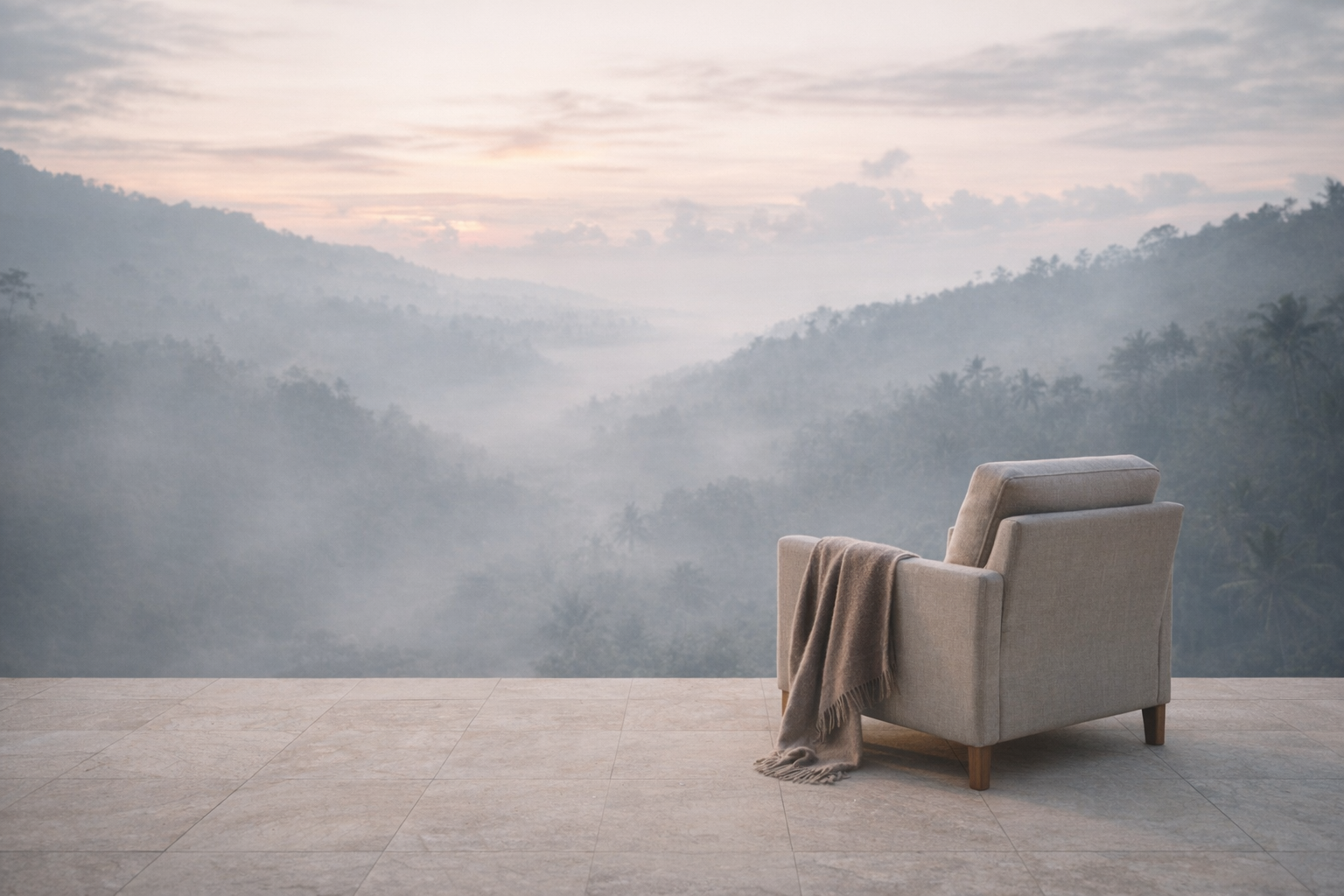
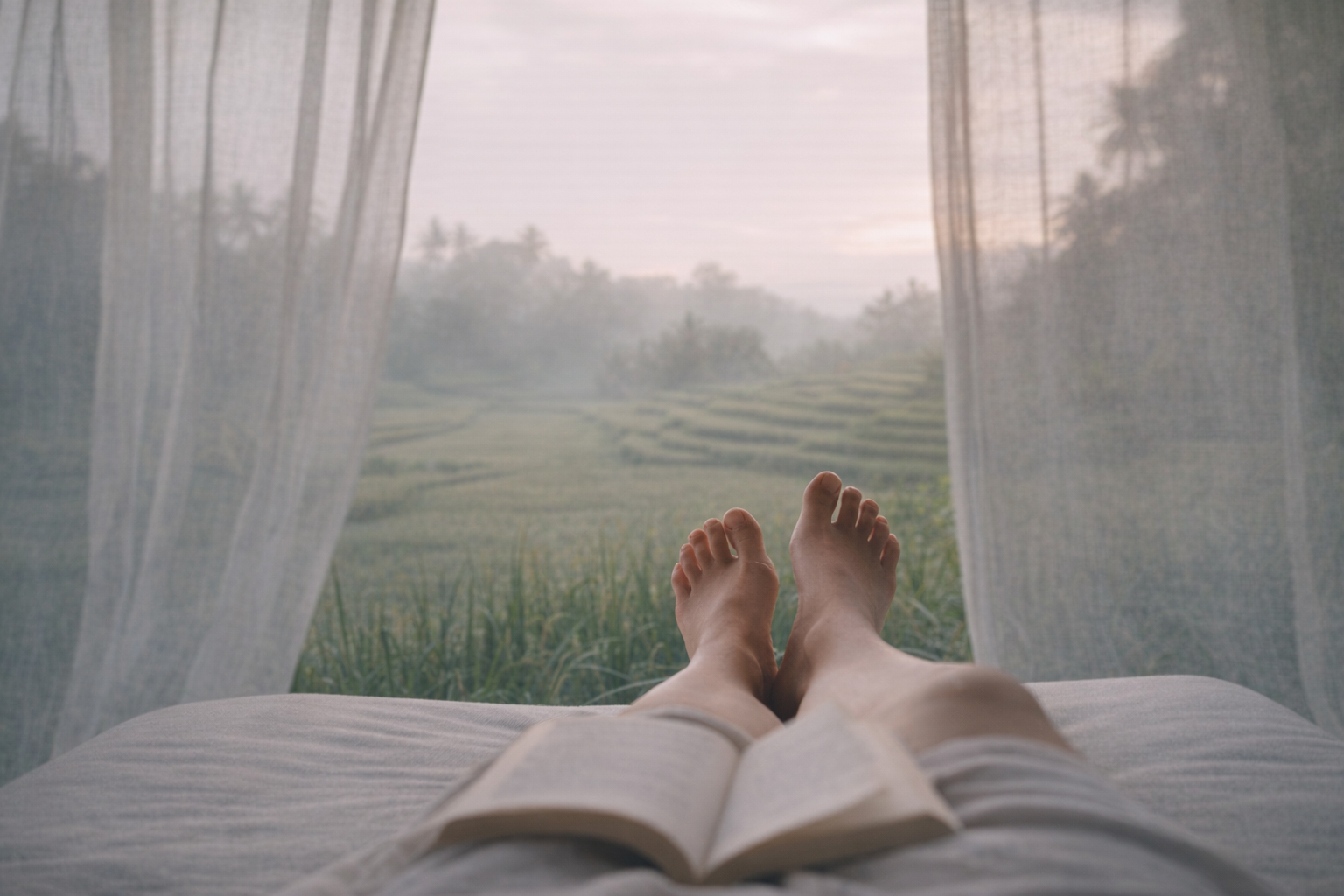
We have become remarkably skilled at filling time. Every hour has a purpose, every day a plan, every holiday an itinerary. We travel to relax and then schedule every moment of the relaxation. We visit beautiful places and spend half our time there deciding where to go next. Somewhere between the cooking class and the temple tour and the sunset cocktail bar, the thing we actually came for, rest, slips quietly out the back door.
The art of doing nothing is not laziness. It is a discipline. And it might be the most luxurious thing your next holiday can offer you.
The Myth of Productive Rest
Modern culture has a complicated relationship with stillness. We have been conditioned to believe that time must be optimised, even leisure time. A morning yoga session is acceptable because it is wellness. A spa treatment is justified because it is self-care. Reading by the pool passes muster because it is enrichment. But simply sitting, watching light move across a wall, listening to birds, feeling the warmth of stone beneath your feet, this feels dangerously close to wasting time.
And yet this is precisely what the body and mind need most after months of relentless productivity. Not another activity disguised as rest, but genuine absence of agenda. The Italians call it dolce far niente, the sweetness of doing nothing. It is not a concept that needs improving or modernising. It just needs permission.
Why the Setting Matters
Doing nothing is surprisingly difficult in the wrong environment. A hotel room with thin walls and a view of the car park does not invite contemplation. A busy resort with scheduled activities and poolside entertainment actively works against it. The art of doing nothing requires a space that makes stillness feel natural, even inevitable.
This is where the best villas excel. A private garden with no audience. A daybed positioned to catch the morning light. A pool that exists not for exercise but for the simple pleasure of being in water. When the setting is right, stillness does not feel like absence. It feels like presence. You are not doing nothing. You are being somewhere, fully and completely, for the first time in months.
The Morning Hours
There is a quality to tropical mornings that resists description. The air is cool but warming. The light is soft, angled low, turning every surface golden. Birds are at their most vocal. The garden is still damp. If you have ever sat on a terrace in the early hours with a coffee going cold because you forgot to drink it, you know this feeling. It is the feeling of time expanding, of minutes lasting longer than they should, of the day ahead feeling infinite rather than finite.
The morning is when doing nothing is at its most rewarding because the mind is quiet. The anxieties of the day have not yet assembled. There is nothing to respond to, no decisions to make, no performance required. Just the simple act of watching the world begin, which turns out to be far more interesting than most of the things we fill our mornings with at home.
Golden Hour and the Evening Pause
The other bookend to the day deserves equal reverence. The hour before sunset in the tropics produces a light so warm and forgiving that everything it touches looks like a painting. Skin glows. Water shimmers. The hard edges of the day soften. This is the hour for a glass of wine on the terrace, for a swim without purpose, for conversation that meanders rather than arrives.
Properties that understand golden hour design their spaces around it. West-facing terraces, pools that catch the last light, dining areas positioned to extend the sunset into dinner. These are not accidental features. They are invitations to pause, to look up from your phone, to let the day end as slowly as it began.
The Return Home
The curious thing about a holiday spent doing very little is how much you bring home from it. Not souvenirs or photographs, though those have their place, but a recalibrated sense of pace. You remember what it feels like to have an unhurried morning. You remember that silence is not emptiness but fullness. You remember that you are a human being, not a human doing, and that the distinction matters more than you thought.
The art of doing nothing is not about the absence of experience. It is the most concentrated form of it. Presence without agenda. Time without pressure. The luxury of simply being alive, somewhere beautiful, with nowhere else to be. There is nothing more expensive than that, and nothing cheaper to achieve. All it costs is the willingness to stop.